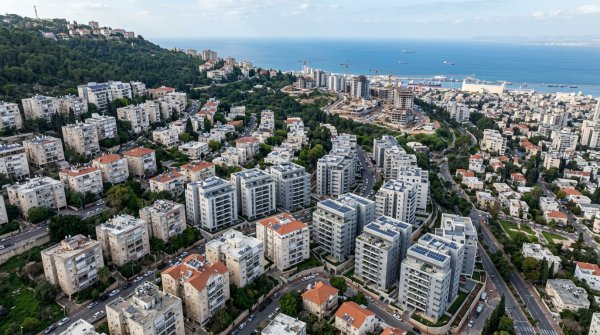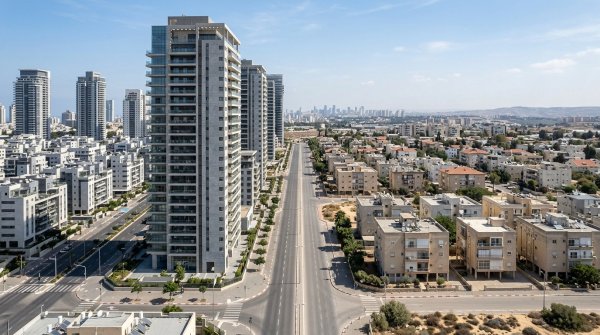
The Infrastructure Revolution: How the Light Rail and Metro are Changing the Game in Gush Dan's Second-Ring Cities
The historical real estate hegemony of Tel Aviv and its adjacent cities has always relied on a simple, age-old equation: physical proximity to employment, commercial, and cultural centers equals higher property values. However, the ever-worsening traffic crisis, combined with housing prices that have broken every possible ceiling in the heart of the metropolis, have pushed buyers and investors to seek alternatives in the second and third-ring cities. Now, the development of mass transit systems - the light rail (Dankal) and the future metro network- is creating a transportation bridge that erases geographical distance and completely rewrites the rules of asset pricing in the central region.
The Red Line: When Promises on Paper Become Reality on the Ground
The impact of this infrastructure is no longer theoretical or a distant promise; it is already clearly evident on the ground with the full operation of the Red Line. Cities like Petah Tikva and Bat Yam, which were previously considered cheaper housing alternatives and suffered from an outdated image, have transformed overnight into strategic magnets. In Petah Tikva, the Jabotinsky axis and the Kiryat Aryeh industrial zone are undergoing an accelerated process of mixed-use development. Entire neighborhoods are changing their face, incorporating residential towers, innovative employment hubs, and commercial centers around the stations, attracting a strong, young demographic and boosting property values.
On the other end of the line, in the city of Bat Yam, the impact is no less dramatic. The proximity to the sea, which was always the city's greatest advantage, is now combined with a commute of just a few minutes to Rothschild Boulevard, the Hasan Arafeh compound, and Tel Aviv's business core. The result is felt directly in the pocketbook: housing prices along the train route have jumped by tens of percentages within just a few years, and developers are competing for every vacant plot or urban renewal project near the park and promenade areas.
The Future is Already Here: The Green and Purple Lines Awaken the South and East
This current trend is rapidly expanding eastward and southward as work progresses on the additional light rail lines. The Green Line and the Purple Line, expected to operate in the coming years, are set to connect cities like Holon, Rishon LeZion, Or Yehuda, and Yehud directly to the heart of Tel Aviv and Israel's largest employment centers. The economic impact on these cities is already being felt today, even before a single train has traveled through them.
In Holon, for example, the Green Line route passing through Sokolov Street and its surrounding avenues is generating a massive wave of urban renewal. Sophisticated developers and investors are already pricing in the future accessibility, and older apartments located within a 500-meter radius of planned stations are being snatched up at premium prices. The goal is clear: to include these properties in Pinui-Binui (evacuation and reconstruction) projects, securing increased building rights and significant value appreciation once the transportation ribbon is cut.
TAMA 70 and the Metro Network: The Growth Engine of the Coming Decades
Hovering above all the light rail projects is the massive governmental Metro plan and its derivative National Outline Plan (TAMA 70). The goal of this initiative is to turn Gush Dan into a true international metropolis networked by fast and efficient underground trains. The plan grants significantly increased building rights around future metro stations, incentivizing mega-projects in the second and even third-ring cities.
The real estate implications of this plan are unprecedented. Cities like Rehovot, Ramla, Kfar Saba, and Ra'anana are popping up on the radar for long-term investments. Institutional investors, insurance companies, and private buyers understand that lands and properties around future transportation hubs will yield the highest and most stable returns in the coming decades. Areas that were once considered remote and heavily congested are expected to become an integral part of the beating heart of the Israeli economy.
A Paradigm Shift: Distance is Measured in Minutes, Not Kilometers
In conclusion, the real estate map of the central region is undergoing a profound shakeup and is being reshaped around public transportation arteries. The flawed old model of absolute reliance on private vehicles, which created massive traffic jams and harmed the quality of life, is making way for a proven global model of Transit-Oriented Development.
For investors and homebuyers, the new real estate rule is clearer, sharper, and more decisive than ever: the distance from Tel Aviv is no longer measured in kilometers of hot, congested asphalt, but in the number of stops and the exact minutes of travel on the light rail and metro. Those who are wise enough to identify these development hubs today are highly likely to enjoy the fruits of their investments in the very near future.
Sources for further reading and in-depth real estate data:
https://www.globes.co.il/news/home.aspx?fid=607